
The topic of games in school is always open to discussion. Some people believe games are a distraction, while others think that when used properly, games can make learning more engaging and interesting. The truth lies somewhere in between. Not every game is suitable for school, but certain free browser-based games can be safe, educational, and beneficial for students.Today, most schools have internet access and computer labs.
In such environments, browser games become a practical option because they do not require downloads. They run directly in a web browser and can be completed in short sessions.In this article, we will discuss some of the top free games that students can responsibly play at school.
Browser-based games offer several clear advantages:
1. No installation required – Students can start playing instantly without downloading software, which saves time and avoids technical issues.
2. No storage usage – Since games run online, they do not take up space on school computers or devices.
3. Quick start and quick exit – Games can be opened and closed within seconds, making them suitable for short breaks.
4. Simple and lightweight – Most browser games are easy to understand and do not require advanced hardware.
5. Controlled usage – Teachers can recommend educational or safe games and set specific time limits to maintain discipline in the classroom.
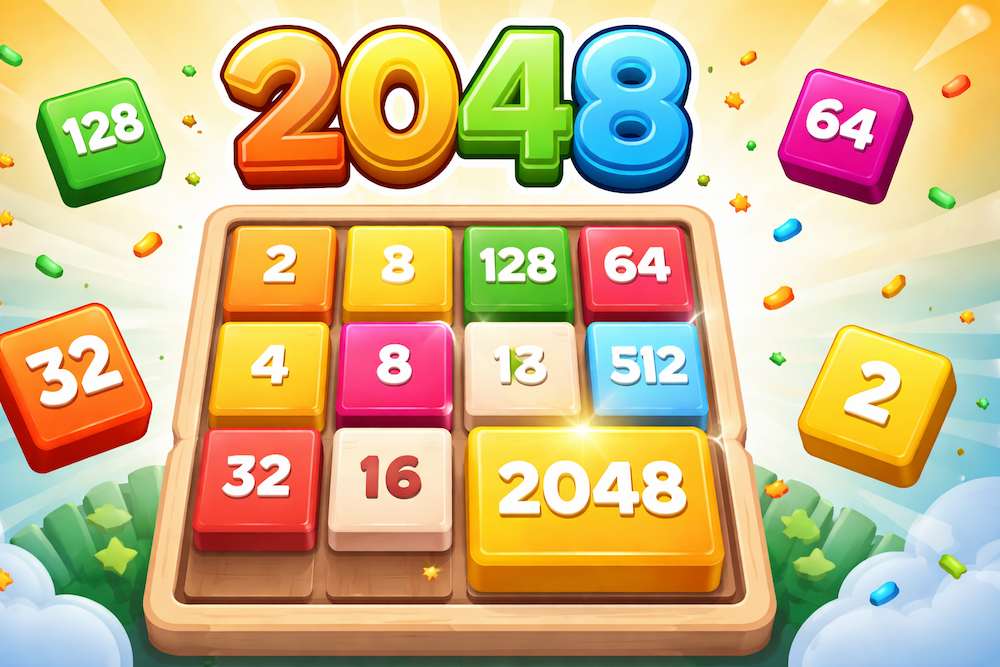
2048 is a number-based puzzle game where students combine matching tiles to gradually reach the 2048 target. Each move shifts all tiles on the grid, so players must think carefully before sliding numbers in any direction. As the board fills up, planning ahead becomes essential to avoid running out of space.
Educational Benefits:
1. Mental Math – Encourages quick addition and number recognition skills.
2. Strategic Thinking – Requires players to plan moves in advance rather than acting randomly.
3. Pattern Recognition – Helps students identify number sequences and optimal tile positioning.
The game appears simple at first, but it demands logical planning and patience, making it ideal for short and productive classroom breaks.
Sudoku is a logic-based grid puzzle where numbers must be placed correctly within a 9×9 grid without repeating in any row, column, or section. The game requires careful observation and step-by-step reasoning to complete the puzzle accurately. As difficulty levels increase, students must think more critically and avoid simple guessing.
Sudoku helps students:
1.Improve Concentration – Encourages sustained focus while analyzing number patterns.
2.Strengthen Logical Reasoning – Develops the ability to apply logical rules systematically.
3.Develop Problem-Solving Skills – Trains students to approach challenges with patience and structured thinking.
It is calm and non-violent, making it a safe and suitable activity for classroom
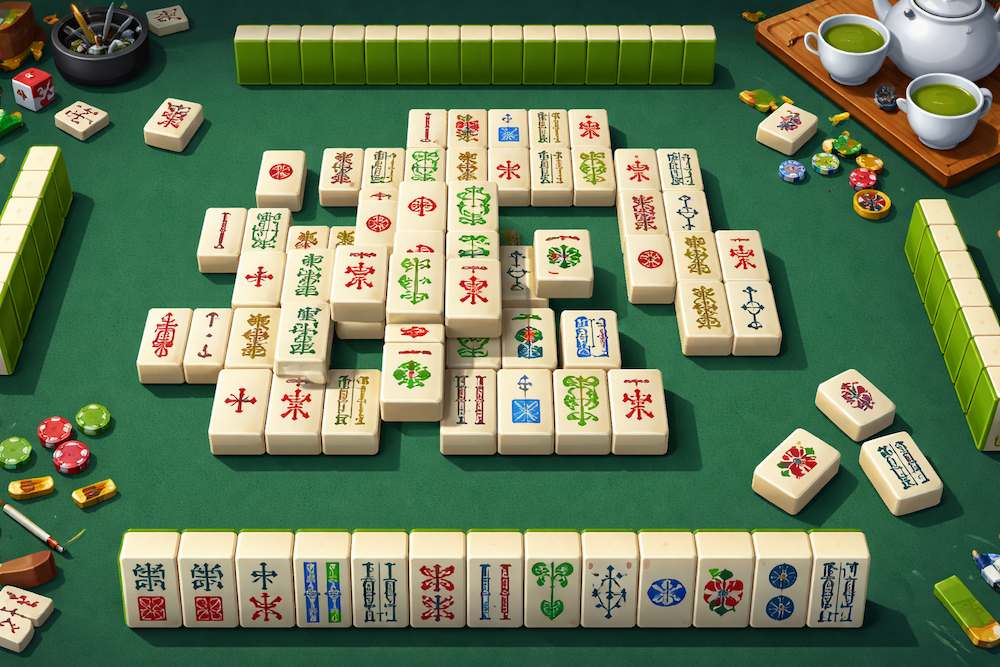
Mahjong is a tile-matching puzzle game that improves focus and memory. Players must carefully observe the board and select identical open tiles to clear them step by step. The game requires attention to detail, as not all tiles are available at once and moves must be planned thoughtfully.Students identify matching tiles at a calm and steady pace, which makes it suitable for classroom settings. Its relaxed gameplay environment supports concentration without creating unnecessary pressure or distraction.
Chess is a timeless strategy game with many free browser versions available, making it easily accessible for students. It is a turn-based game that requires patience, focus, and careful calculation of moves. Each decision can influence the entire match, encouraging players to think several steps ahead before acting.
Chess helps students:
1.Long-Term Planning – Teaches students to anticipate outcomes and plan multiple moves in advance.
2.Strategic Thinking – Develops the ability to analyze positions and create effective strategies.
3.Decision-Making Skills – Strengthens judgment by requiring thoughtful choices under pressure.
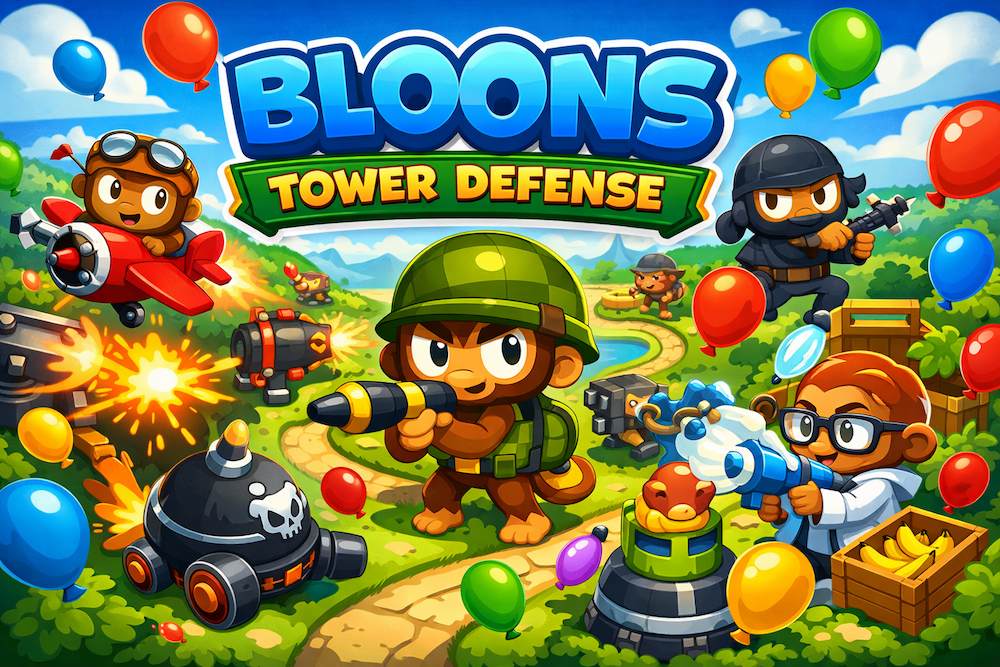
In Bloons Tower Defense, players strategically place different types of defensive towers to stop waves of balloons from reaching the end of the path. Each tower has unique abilities, and players must choose wisely based on the incoming balloon types and difficulty level. As levels progress, the challenge increases, requiring smarter decisions and better upgrades.
Benefits:
1.Resource Management – Teaches players how to use limited in-game currency efficiently.
2.Strategic Placement – Encourages careful positioning of towers for maximum impact.
3.Forward Planning – Develops the ability to anticipate future waves and prepare in advance.
It is especially suitable for middle school students because it combines fun gameplay with practical strategic thinking skills.
Chessformer is a creative puzzle-style game that uses classic chess movement rules in a unique and simplified format. Instead of traditional multiplayer competition, players solve structured levels by moving chess pieces strategically to complete specific objectives. Each puzzle requires careful thinking and understanding of how different pieces move.
The game encourages logical reasoning, forward planning, and spatial awareness. Because it focuses on problem-solving rather than competition, it is well-suited for classroom environments and individual brain training sessions.

A simple timing-based basketball game where students must tap or click at the right moment to score points. The main objective is to shoot the ball into the hoop with accurate timing, as missing the correct moment results in failure. As the game progresses, the speed and difficulty gradually increase, demanding better concentration and precision. Its straightforward controls make it easy to understand, even for younger students.
Benefits:
1.Coordination – Helps improve hand-eye coordination through repeated timing-based actions.
2.Reaction Speed – Trains students to respond quickly as the game pace gradually increases.
3.Focus Control – Encourages short bursts of concentration during gameplay.
While it is mainly for quick fun, it can serve as a light mental break between study sessions.
Slope is a fast-paced reflex game where players control a rolling ball moving down a continuously changing 3D track. The main objective is to avoid obstacles, sharp turns, and sudden drops while maintaining balance and speed. As the game progresses, the speed gradually increases, making it more challenging and requiring quick reactions.It improves coordination and reaction time, but due to its fast pace and competitive nature, it can become addictive. Teacher supervision is recommended to ensure balanced and limited gameplay in a school environment.

In today’s digital era, completely restricting games in schools is not always the most effective approach. When safe, age-appropriate, and monitored games are allowed in a structured way, they can provide meaningful educational and developmental benefits. Instead of being a distraction, controlled gaming can support student growth both academically and socially.
Interactive learning methods significantly increase student participation. Educational and strategy-based games make lessons more dynamic, helping students stay actively involved rather than passively listening. Gamified activities encourage curiosity, critical thinking, and faster problem-solving.
Research and classroom experience suggest that short mental breaks improve productivity. Allowing limited gaming time during breaks can help reduce stress and mental fatigue. After a brief 5–10 minute refresh session, students tend to return to their studies with improved concentration levels and higher efficiency.
Score-based and multiplayer games promote friendly competition among students. Healthy competition builds confidence, goal-setting ability, resilience, and teamwork skills. When students strive to improve their performance, they develop strategic thinking and decision-making abilities that are valuable beyond gaming environments.
Digital literacy is an essential life skill in modern education. Supervised access to safe games helps students understand responsible internet usage, cybersecurity basics, and time management.
Instead of completely banning games, it is more effective to manage and guide their usage in a structured way. When used properly, browser games can support learning, improve engagement, and provide healthy mental breaks for students. The key is supervision and clear boundaries.
Teachers can:
1.Use Games as Rewards – Allow short gameplay sessions after students complete assignments or achieve learning goals.
2.Set Time Limits (10–15 Minutes) – Controlled time frames prevent overuse and maintain classroom discipline.
3.Prioritize Educational Games – Choose puzzle, logic, and strategy games that support cognitive development.
4.Organize Group-Based Puzzle Challenges – Encourage teamwork and collaborative problem-solving through structured activities.
With this balanced approach, gaming becomes a productive learning tool rather than a distraction in the classroom.
Free browser games can be a useful addition to the school environment when they are chosen carefully and used in moderation. Puzzle, logic, and strategy games allow students to relax for a short time while still exercising important thinking skills. Because these games run directly in a browser, they are easy to access and do not create technical issues for school systems.
However, balance is important. Games should never replace learning time but can serve as short mental breaks or rewards after completing academic tasks. When teachers guide students toward safe and educational options, browser games can become a positive tool that supports focus, creativity, and problem-solving in the classroom.